It was a drizzly Saturday afternoon on Atlantic Ave, the sky a blanket of gray over Hallandale Beach. The streetlight reflected on the slick surface, and the sudden hiss of air from a tire caught my eye as I pulled over. The rain had turned the asphalt into a mirror, and the world seemed to shrink to the size of my car’s dashboard. That moment is a common one for drivers in our area, especially when the storm rolls in from the Gulf and leaves a thin film of water on every turn.
What should you do first when you feel a flat in the rain?
When the car shudders and the warning light blinks, the first thing is to find a safe spot. In Hallandale’s wet streets, a wide shoulder or a parking lot is ideal. Don’t try to stay on the road; the slick surface can make your car slide. Turn the steering wheel gently to keep the car straight and bring the speed down to about 20 mph. Once stopped, keep the hand on the wheel in case the tire loses grip.
Why does water on the road increase the risk of a flat?
Water creates a thin layer between the tire tread and the asphalt. This layer reduces friction, so the tire can’t grip the road as well. If a tire already has a puncture or a weak spot, the loss of traction makes the air escape faster. In our coastal climate, the salt in the air also weakens rubber over time, so a rainy flat can happen quicker than on a dry day.
How to safely stop your vehicle when rain makes the road slick?
Don’t slam on the brakes; let them roll. Apply the brakes lightly, then use the engine to slow down. If your car lets you select a lower gear range, use it to help slow the car gently. Keep your foot on the brake until the car is fully stopped. If you’re in a parking lot, use the parking brake after you’re completely stopped to keep the car from rolling.
What should you inspect on the tire after a rainy flat?
Once the car is stopped, look at the tire’s sidewall and tread. Check for cuts, bulges, or a visible puncture. If you see any of these, the tire is likely damaged. Look for water pooling on the tread and around the rim; standing water can hide a cut or a bead leak, so wipe the tire down before you judge it.
The next step is to see if the wheel is still balanced. A sudden flat can throw the wheel out of alignment, and if you’re driving through the wet streets, an uneven wheel can cause the car to pull to one side. If you notice a pull or vibration, it’s a sign you need professional help before continuing.
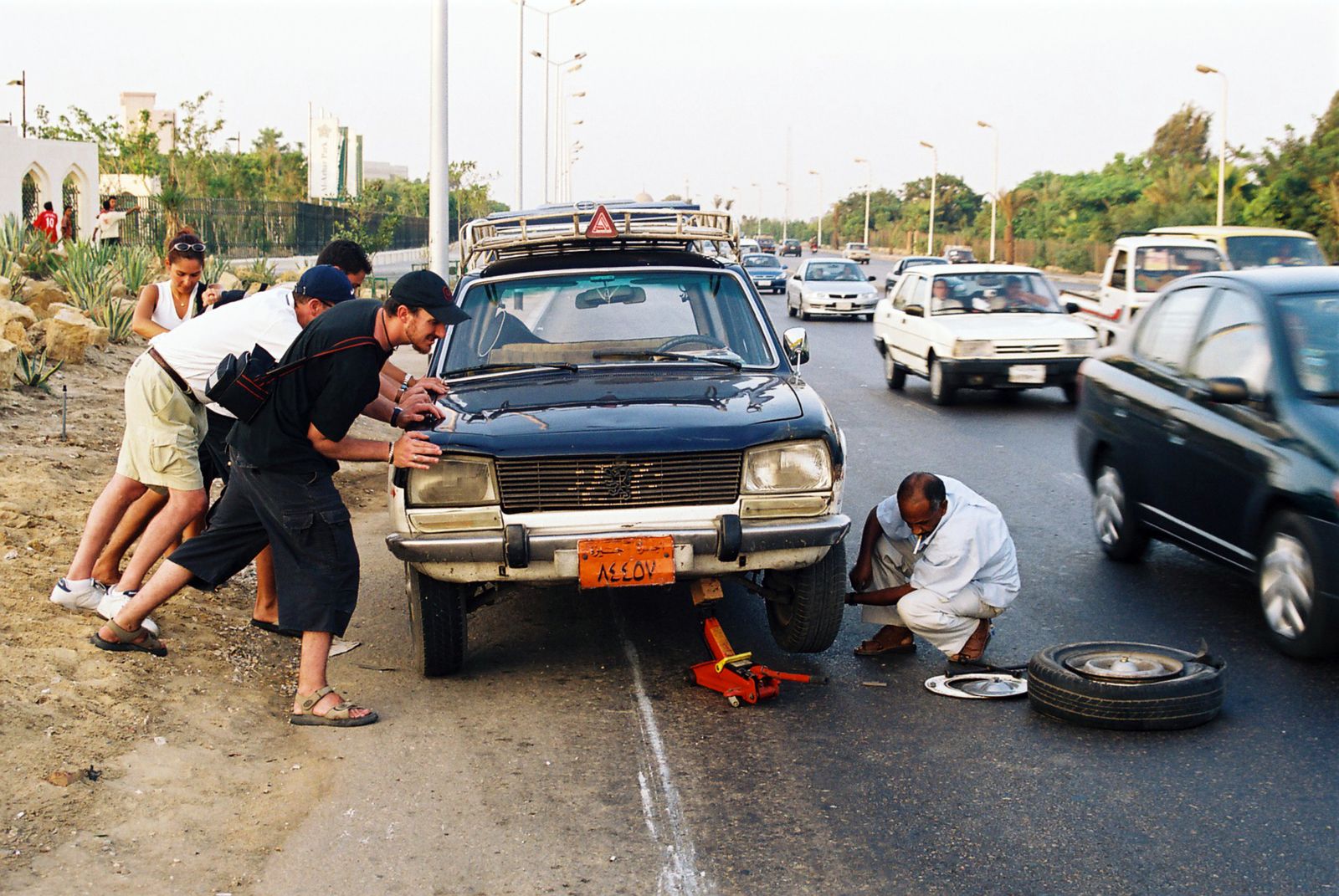
If you decide to swap on the spare yourself once you are safely stopped, technique matters more in the rain, not less — a jack placed wrong or a lug nut cross-threaded on a wet roadside turns a flat into body damage. The video is a step-by-step tire-change lesson from an independent garage channel: how to change a tire on a car or truck without damaging the vehicle, with the best practices a DIY mechanic should follow for a safe, efficient change. Watch how the car is secured and how each step is done in order before you start. Then apply this post's rain rules on top of it: hazards on, well clear of the travel lane, and if the shoulder is flooded or traffic is passing close, skip the swap entirely and call us instead.
How long can you drive on a flat tire before it worsens?
Running on a flat is like walking on a broken bridge. The more miles you put on it, the more the rim can bend and the tire can tear. In Hallandale’s wet streets, a flat can worsen in as little as 10 minutes. If your ride is in a parking lot, you can move it to a safer spot, but if you have to keep moving, keep the speed below 15 mph and avoid any turns.
When should you call Hallandale Mobile Tire for help?
If the tire shows a cut, bulge, or a puncture that’s deeper than 1 in, call us right away. Also call if the wheel feels loose, if the car pulls to one side, or if the tire’s pressure is below 28 psi. Our technicians can drive to your location, swap the tire, and verify the new tire’s pressure, all while you stay safe in your car. We’re open Monday through Saturday, 8 AM to 8 PM, and we cover Hallandale Beach and the rest of Broward County.
When to call us
DIY is great, but some jobs need a pro. If the problem persists, you spot anything dangerous, or you'd rather have an expert handle it, call (754) 243-8415 — Hallandale Mobile Tire serves Hallandale Beach and Broward (Mon-Sat 8AM-8PM). No pressure, no upsells.
Stuck on the Shoulder Right Now?
Hazards on, passenger-side exit, call dispatch. We roll in 15 minutes.
📞 Call (754) 243-8415If You Don't Have a Spare
Many newer vehicles (and most diplomat-garage vehicles) ship without a spare. If that's you, our Diagnostic is the next read: scenarios/no-spare-tire.html. Service call is $40 with a $40 booking hold, and we get you home or to a shop.