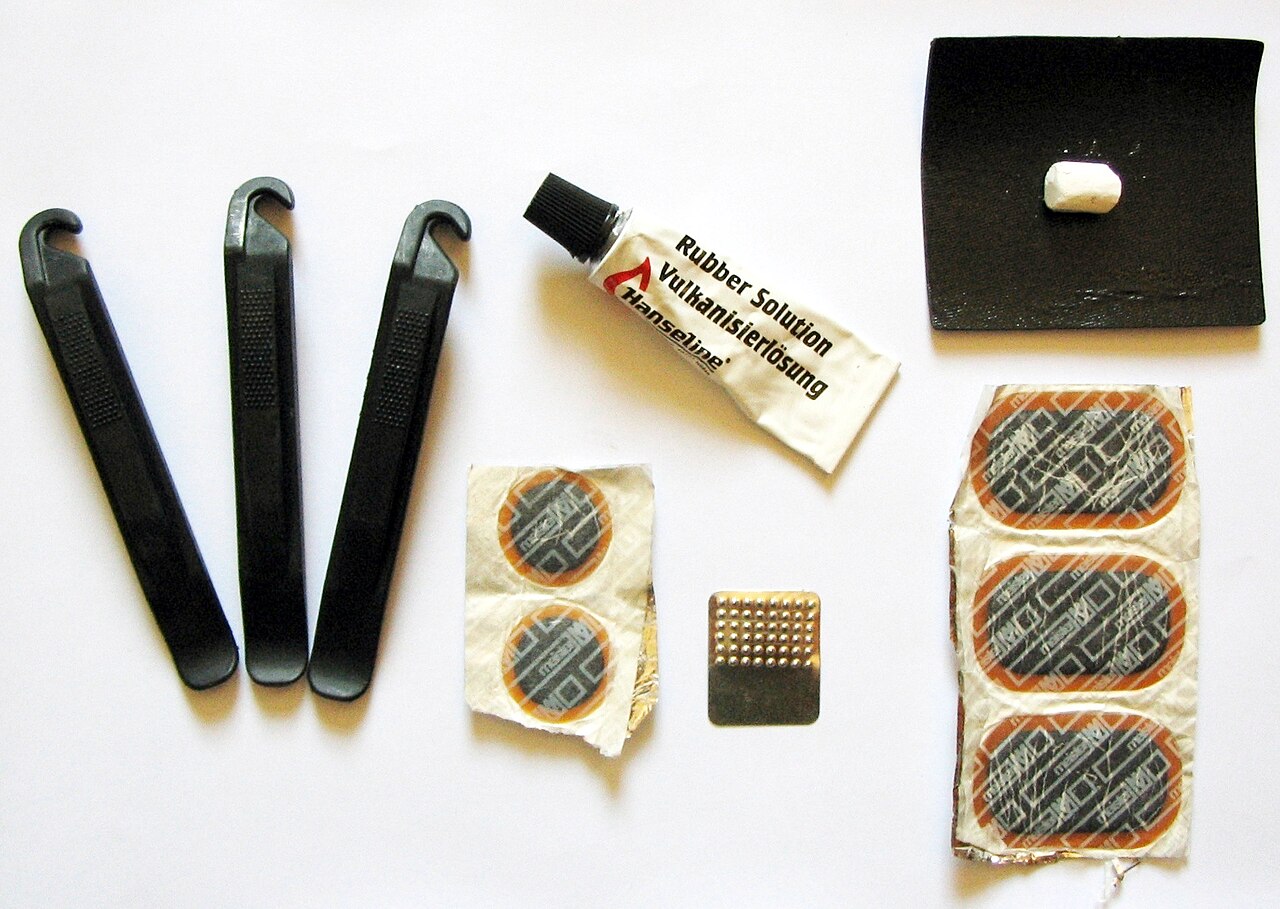
It was a humid July evening in Hallandale Beach. The sun had just dipped below the Atlantic, casting a golden glow over Collins Avenue. I was on my way home from the grocery store when the tire on my passenger side gave a soft pop. The steering wheel shuddered, and the dashboard light flashed. A nail in the tread had worked its way in, and now I had a slow leak and a decision to make: plug it, or patch it?
A plug fills the puncture hole from the outside; a patch seals the tire's inner liner from the inside. Neither one alone is the industry-standard permanent fix — the proper repair is a plug-and-patch combination done with the tire off the wheel. A string plug by itself is a temporary roadside fix.
What is a plug repair?
A plug is a sticky rubber cord pushed into the puncture from the outside of the tire, usually with a simple hand tool. It fills the hole so air stops escaping. Plug kits are cheap, the fix takes minutes, and you can do it on the side of the road without removing the wheel. That's why so many drivers swear by them.
The catch: a plug alone doesn't seal the tire's inner liner — the airtight rubber layer inside the tire. The puncture channel stays open to moisture, which can work its way in and corrode the steel belts over time. That's why tire industry groups call a plug-only repair temporary. It's meant to get you home or to a shop, not to last the life of the tire.
What is a patch repair?
A patch is a flat rubber disc glued to the inside of the tire, over the puncture. The wheel has to come off and the tire has to come off the wheel, so it's a shop job, not a roadside one. The patch seals the inner liner airtight, which a plug can't do.
The catch with a patch alone: the puncture channel through the tread stays open. Moisture and road grit can enter the hole from the outside and reach the steel belts. So a patch-only repair seals the air in but leaves the structure exposed.
Which repair actually lasts?
The repair that lasts is the combination: a plug to fill the puncture channel plus a patch to seal the inner liner. Tire industry associations teach this as the only proper permanent repair for a tread puncture. Done right, a plug-patch combo lasts the remaining life of the tire.
Stacked up alone, neither wins. A plug-only fix is temporary by definition — fine for an emergency, but it should be followed up with a proper repair. A patch-only fix is better than a plug alone, but it leaves the hole open to the elements. If a shop offers you one or the other as a "permanent" fix, ask for the combination.
When can a tire be repaired at all?
Only punctures in the tread area, and only if the hole is no bigger than about a quarter inch across, are repairable. Damage to the sidewall or the shoulder (where the tread meets the sidewall) can't be fixed safely — the flexing in those areas will work any repair loose. A tire with sidewall damage, a bubble, or a gash needs to be replaced, not repaired.
Also, a tire that's been driven on while flat may have internal damage you can't see from the outside. If you drove more than a short distance on it, have the shop inspect the inside before agreeing to any repair.
What should I do on the side of the road?
If you pick up a nail and the tire is losing air slowly, a plug kit from the auto parts store is a legitimate emergency move — it gets you rolling again without waiting for a tow. Drive gently, keep your speed down, and treat it as temporary. Then get to a shop for the plug-patch combo or a replacement. If the tire is going flat fast or the damage is in the sidewall, don't plug it — put on the spare and call for help.
The video above, "Tire puncture — Patch it, or plug it?" from Mic's Motorworx, works through both repairs hands-on on real tires — pushing a plug into a puncture from the outside, then doing the patch from the inside — so you can see exactly what each method involves and why the combination of the two is the repair that actually lasts.
When to call us
DIY is great, but some jobs need a pro. If the puncture is in the sidewall, the tire went flat fast, or you'd rather have an expert handle it, call (754) 243-8415 — Hallandale Mobile Tire serves Hallandale Beach and Broward (Mon-Sat 8AM-8PM). No pressure, no upsells.
Stuck on the Shoulder Right Now?
Hazards on, passenger-side exit, call dispatch. We roll in 15 minutes.
📞 Call (754) 243-8415If You Don't Have a Spare
Many newer vehicles (and most diplomat-garage vehicles) ship without a spare. If that's you, our Diagnostic is the next read: scenarios/no-spare-tire.html. Service call is $40 with a $40 booking hold, and we get you home or to a shop.