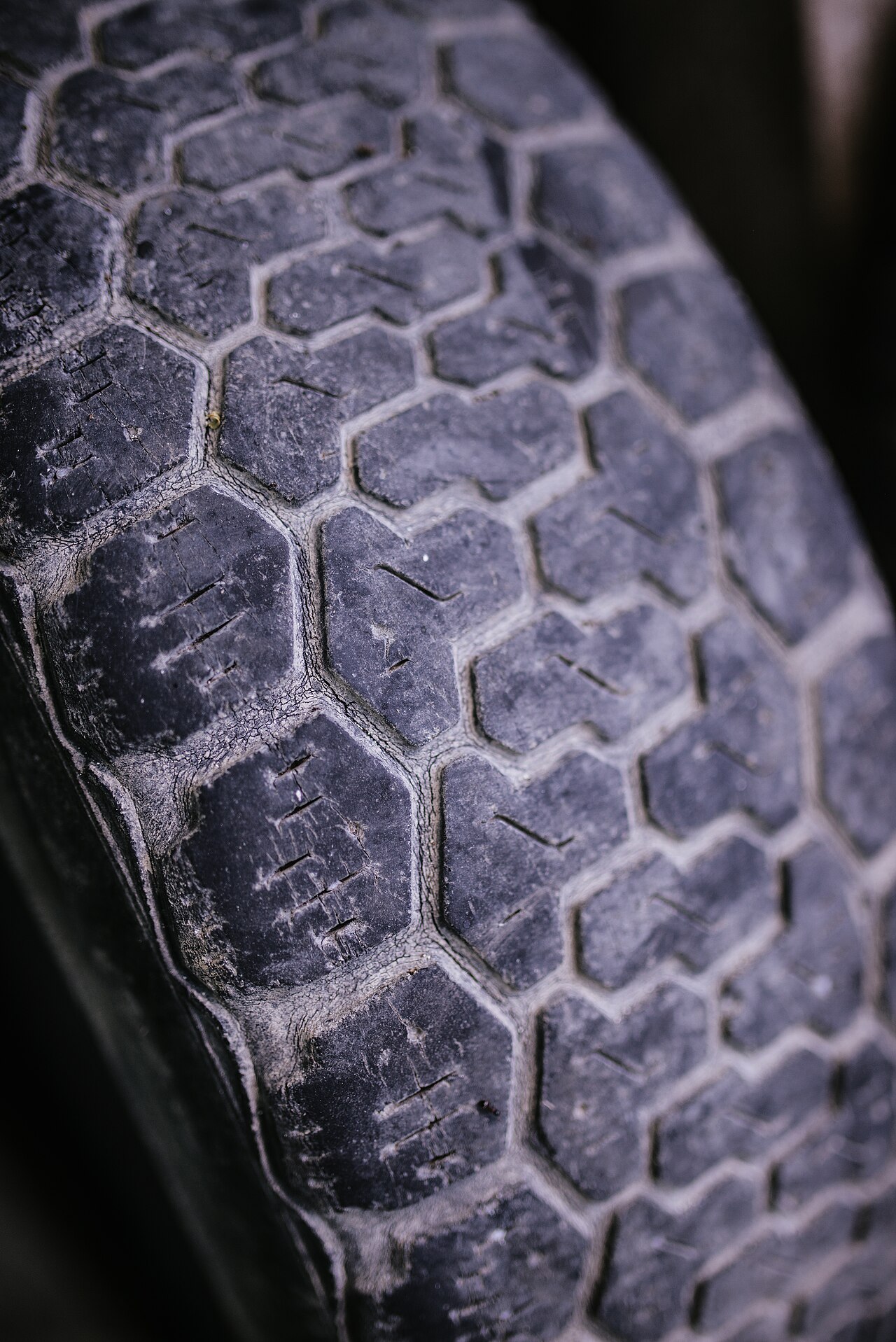
 You're cruising east on Hallandale Beach Boulevard just past the Diplomat, windows down, the ocean breeze pushing through. Around 45 mph the steering wheel starts a slow shake — not violent, just a steady hum you feel in your fingertips. You just had that nail patched last month near the Publix on Federal Highway. The shop said it was good to go. Now the vibration comes and goes with speed, worst right at 55, gone by 70. That's patch wear talking. The repair area has worn different than the rest of the tread, and the tire's throwing itself off balance every rotation.
A tire patch can wear at a different rate than the surrounding tread, creating a heavy or light spot that throws the wheel out of balance. You'll feel it as a speed-specific vibration — usually worst between 45 and 65 mph — that fades at higher speeds. The fix is a rebalance; if the patch has loosened or the tire's damaged, the tire needs replacement.
What is patch wear and why does it happen?
A patch is a rubber plug bonded to the inner liner of your tire, covering a puncture from the inside. It's vulcanized — heat and pressure fuse it into the tire casing. But the patch material isn't identical to the original tire rubber. It can be slightly harder or softer, thicker or thinner. As miles stack up, that difference shows up as uneven wear. The patch area might wear faster, leaving a shallow dip, or slower, leaving a tiny ridge. Either way, the tire's mass is no longer even around its circumference. Think of a ceiling fan with one blade a hair heavier. At low speed you don't notice. At medium speed the whole fan shudders. At high speed centrifugal force masks it again. Your patched tire does the same thing on the road.How do you know it's the patch and not something else?
The vibration has a fingerprint. It appears in a narrow speed band — typically 45 to 65 mph — and smooths out above 70. You feel it in the steering wheel if it's a front tire, in the seat floor if it's a rear. It's rhythmic, matching wheel rotation, not engine RPM. If you shift to neutral at the shake speed, the vibration stays. That rules out drivetrain. Run your hand over the tread of the repaired tire (when it's cool). Feel for a slight dip or ridge right where the patch sits inside. You might see a faint wear pattern — a narrow band across the tread face that looks shinier or duller than the rest. That's the patch outline telegraphing through.Why does a balanced tire go out of balance after a patch?
When the shop patched your tire, they likely rebalanced the wheel. The patch added a few grams in one spot. The balancer compensated with weights opposite. But as the patch wears different than the tread, the mass distribution shifts. The original balance weights are now wrong for the new shape. It's not that the patch failed — it's that the tire changed shape around it. Heat accelerates this. Summer pavement in South Florida bakes the tire and the patch, and the two materials expand at slightly different rates. Every heat cycle flexes the bond line microscopically. After a few thousand miles of Hallandale Beach Boulevard and I-95 commuting, the wear pattern settles in.Can you drive on it for a while?
Short answer: yes, but it costs you. The vibration fatigues suspension bits — tie rods, ball joints, wheel bearings — faster than normal. It also wears the tire unevenly, shortening its life. You're basically driving with a tiny hammer tapping the suspension hundreds of times a minute at highway speed. If the patch edge starts to lift (rare but possible), air loss follows fast.What does the rebalance process look like?
The tech pulls the wheel, spins it on the balancer, reads the imbalance, and adds or moves clip-on or stick-on weights. Takes about 15 minutes per wheel. If the patch area shows a deep dip or the tread depth difference exceeds 2/32 inch across the patch, rebalance won't fix the vibration — the tire's physically uneven. Then it's replacement time.What if the vibration started right after the patch?
That's different. If the shake appeared the same day as the repair, the patch might be slightly off-center, or the tire wasn't rebalanced at all, or the wheel weight fell off. Call the shop that did the work. A fresh patch shouldn't vibrate.The video above shows tire patch repairs being done hands-on — a good visual companion once you understand how a patch sits inside the tire.
How often should you check a patched tire?
Every rotation — roughly every 5,000 to 6,000 miles — have the shop inspect the repair and rebalance if needed. Many shops include a balance check with rotation at no extra charge. If you feel a new vibration between rotations, don't wait. A quick spin on the balancer tells the story in two minutes.Does the type of patch matter?
A plug-patch (mushroom style) seals the hole and bridges the inner liner. A patch-only (flat disk) covers the injury from inside. Both can wear different than the tire. The plug-patch has more material crossing the tread area, so it can create a slightly more pronounced wear band. Neither is "better" for balance — both need monitoring.When to call us
DIY is great, but some jobs need a pro. If the problem persists, you spot anything dangerous, or you'd rather have an expert handle it, call (754) 243-8415 — Hallandale Mobile Tire serves Hallandale Beach and Broward (Mon-Sat 8AM-8PM). No pressure, no upsells.
Stuck on the Shoulder Right Now?
Hazards on, passenger-side exit, call dispatch. We roll in 15 minutes.
📞 Call (754) 243-8415If You Don't Have a Spare
Many newer vehicles (and most diplomat-garage vehicles) ship without a spare. If that's you, our Diagnostic is the next read: scenarios/no-spare-tire.html. Service call is $40 with a $40 booking hold, and we get you home or to a shop.