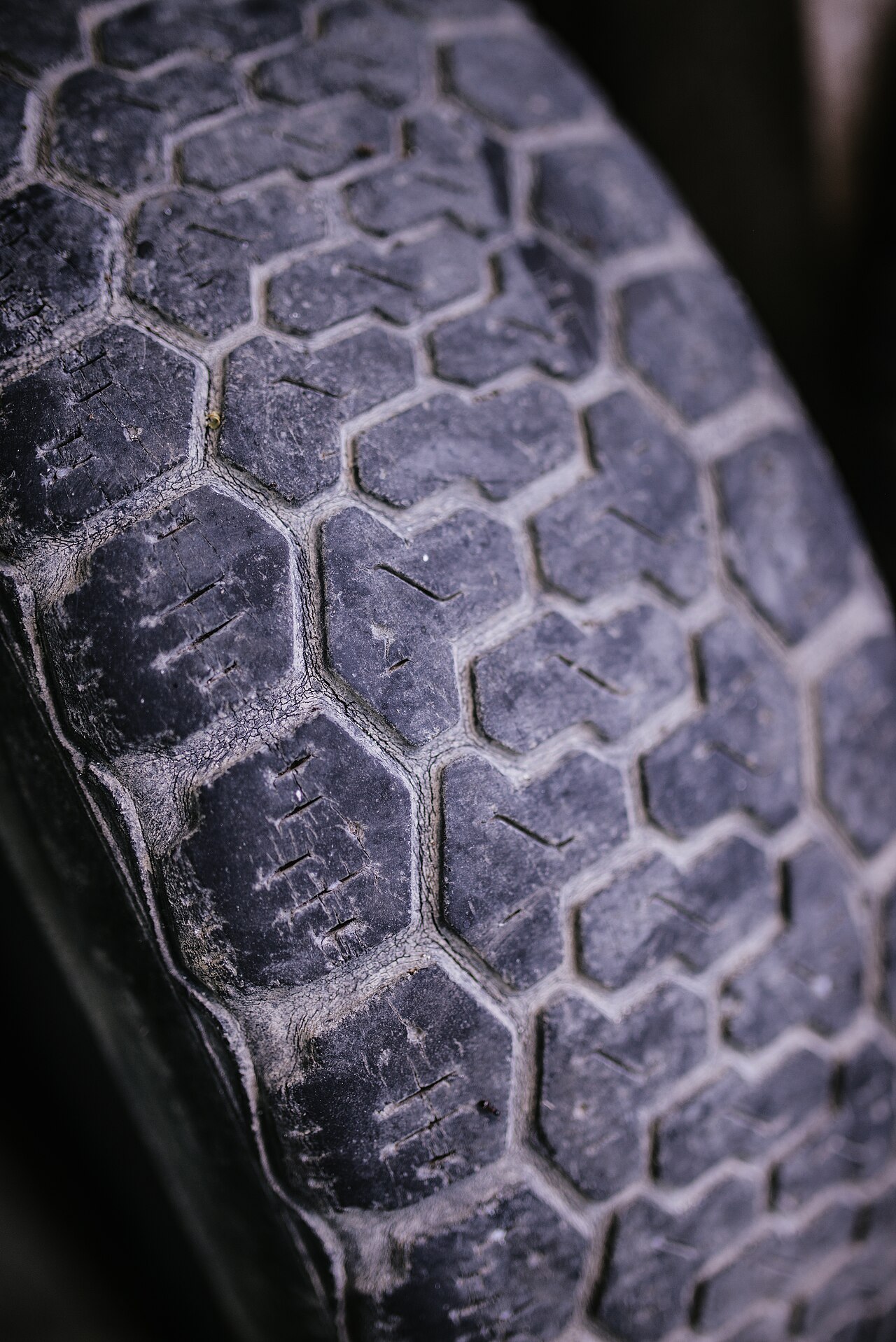
 You're heading west on Hallandale Beach Boulevard past the Big Easy Casino around 4:30 p.m., the sun low enough to glare off the hood, and your steering wheel starts a slow shake that wasn't there this morning. At 55 mph it feels like the front end is walking sideways. You pull into the parking lot by the Publix at Hallandale Beach Boulevard and Federal Highway, run your hand across the front passenger tire, and feel rows of scooped-out rubber — high, low, high, low — like someone took a melon baller to the tread. That's cupping wear, and it's telling you the suspension isn't holding that tire flat to the road.
Cupping wear shows up as repeating high-and-low spots around the tire tread, usually spaced 3 to 4 inches apart, caused by the tire bouncing instead of rolling smoothly. It means your shocks, struts, or related suspension parts aren't damping the wheel's up-and-down motion, so the tire loses contact with the pavement and wears in patches. If you feel a vibration at highway speed or hear a rhythmic thump-thump-thump, check the tread with your hand — cupping is the first clue the suspension needs attention before it chews through a new set of tires.
What does cupping wear look like up close?
Run your fingers across the tread face. Smooth rubber should feel flat and even. Cupped tread feels like a washboard — raised ribs separated by shallow valleys. The pattern repeats every few inches around the circumference. On a front tire you'll often see it on the inside or outside shoulder first. On a rear it can show up across the center if the rear shocks are shot. The valleys are usually 1/32 to 2/32 of an inch deeper than the ribs. That doesn't sound like much, but at 60 mph the tire is slamming into the pavement 800 times a minute. Each impact carves the valley deeper.Why does the tire bounce instead of roll?
Your suspension has two jobs: hold the car up and keep the tires planted. Springs hold the weight. Shocks and struts control the spring's rebound. When a shock loses its oil or its internal valve wears out, the spring pushes the wheel down hard after every bump, then the wheel overshoots and lifts off the road. For a split second the tire is airborne. When it lands, it scrubs rubber in one spot. Do that a thousand times and you get cupping. Worn ball joints, tie rod ends, or control arm bushings add slop that lets the wheel wobble side to side, which makes the cupping pattern uneven — deeper on one shoulder than the other.How can you check the suspension yourself?
Park on level ground. Push down hard on each corner of the car and let go. The body should rise once and settle. If it keeps bobbing two or three times, that shock or strut is weak. Grab the tire at 9 and 3 o'clock and wiggle. Any clunk or play means a tie rod end or ball joint. Do the same at 12 and 6 o'clock — play there points to a wheel bearing or ball joint. Shine a flashlight up behind the front wheels. Look for oil seeping down the shock body or strut housing. A wet film means the seal has failed and the damping fluid is gone. Also check the rubber bushings on the control arms. Cracked or mushy bushings let the wheel shift under braking and acceleration, which accelerates cupping.What driving habits make cupping worse?
Hard braking into every red light on Hallandale Beach Boulevard loads the front suspension and unloads the rear. The front tires dig in, the rear tires hop. Over time that hop wears the rear tread into cups. Carrying heavy loads in the trunk without adjusting tire pressure does the same thing — the rear springs compress, the shocks run out of travel, and the tires bounce on the bump stops. Hitting potholes on Federal Highway or the service roads near I-95 at speed bends control arms and kills shocks faster than normal driving. If you tow a trailer, the tongue weight changes the rear ride height and the shock's operating range, which can bring on cupping in as little as 5,000 miles.Can cupping be fixed by rotating the tires?
Rotation moves the cupped tire to a different corner, but the high-and-low pattern is already cut into the rubber. The vibration follows the tire. You might buy a few thousand miles of quieter driving, but the cupping will telegraph through the steering wheel again. The only way to stop the wear pattern from getting worse is to fix the suspension first, then replace the cupped tires. If you put new tires on bad shocks, the new tires will start cupping inside 3,000 miles. We've seen it on cars that came in for a simple tire swap and left with a suspension referral — the tread told the story before the owner even knew there was a problem. The video breaks down the real cause of tire cupping: worn shocks and struts that let the wheel bounce instead of staying planted. It explains why cupping shows up even after a fresh alignment, how the bounce scours rubber into repeating scoops, and why fixing the suspension usually means new shocks or struts, a road-force balance, and a final alignment. Key takeaway that matches what we see on the road here: once the tread is cupped, the tire itself is permanently damaged, so fixing the suspension first and then replacing the rubber is the only sequence that holds.How long do shocks and struts usually last around here?
South Florida heat and salt air shorten the life of suspension components. A typical shock or strut on a daily driver in Broward County starts losing damping around 50,000 to 60,000 miles. If you drive the beach corridors — A1A, Ocean Drive, Hallandale Beach Boulevard — the salt spray attacks the chrome shafts and seals faster. We've pulled struts at 40,000 miles that were bone dry inside. Ball joints and bushings follow a similar timeline. The rubber dries out, cracks, and tears. If you're past 50,000 miles and haven't had the suspension inspected, assume something is worn. The cupping on your tires is the receipt.What happens if you ignore cupping?
The vibration gets worse. The tire loses traction in wet weather because the valleys can't channel water — they just trap it. Braking distance increases. The tire can develop a flat spot from repeated hard landings, which turns the thump into a violent shake. Eventually the tire cord separates and you're looking at a blowout risk. On the suspension side, a failed shock transfers every impact straight to the spring seats, control arms, and body mounts. That cracks metal and bends brackets. A $300 strut job becomes a $1,500 suspension rebuild. The math is simple: fix the cause when the tread first shows the pattern.When to call us
If you feel a steering wheel shake at highway speeds, hear a rhythmic thump from one corner, or run your hand across the tread and feel those washboard ribs, call Hallandale Mobile Tire at (754) 243-8415. We'll come to you in Hallandale Beach and Broward, inspect the suspension, and tell you exactly what's worn. If the tires are cupped but the suspensionStuck on the Shoulder Right Now?
Hazards on, passenger-side exit, call dispatch. We roll in 15 minutes.
📞 Call (754) 243-8415If You Don't Have a Spare
Many newer vehicles (and most diplomat-garage vehicles) ship without a spare. If that's you, our Diagnostic is the next read: scenarios/no-spare-tire.html. Service call is $40 with a $40 booking hold, and we get you home or to a shop.