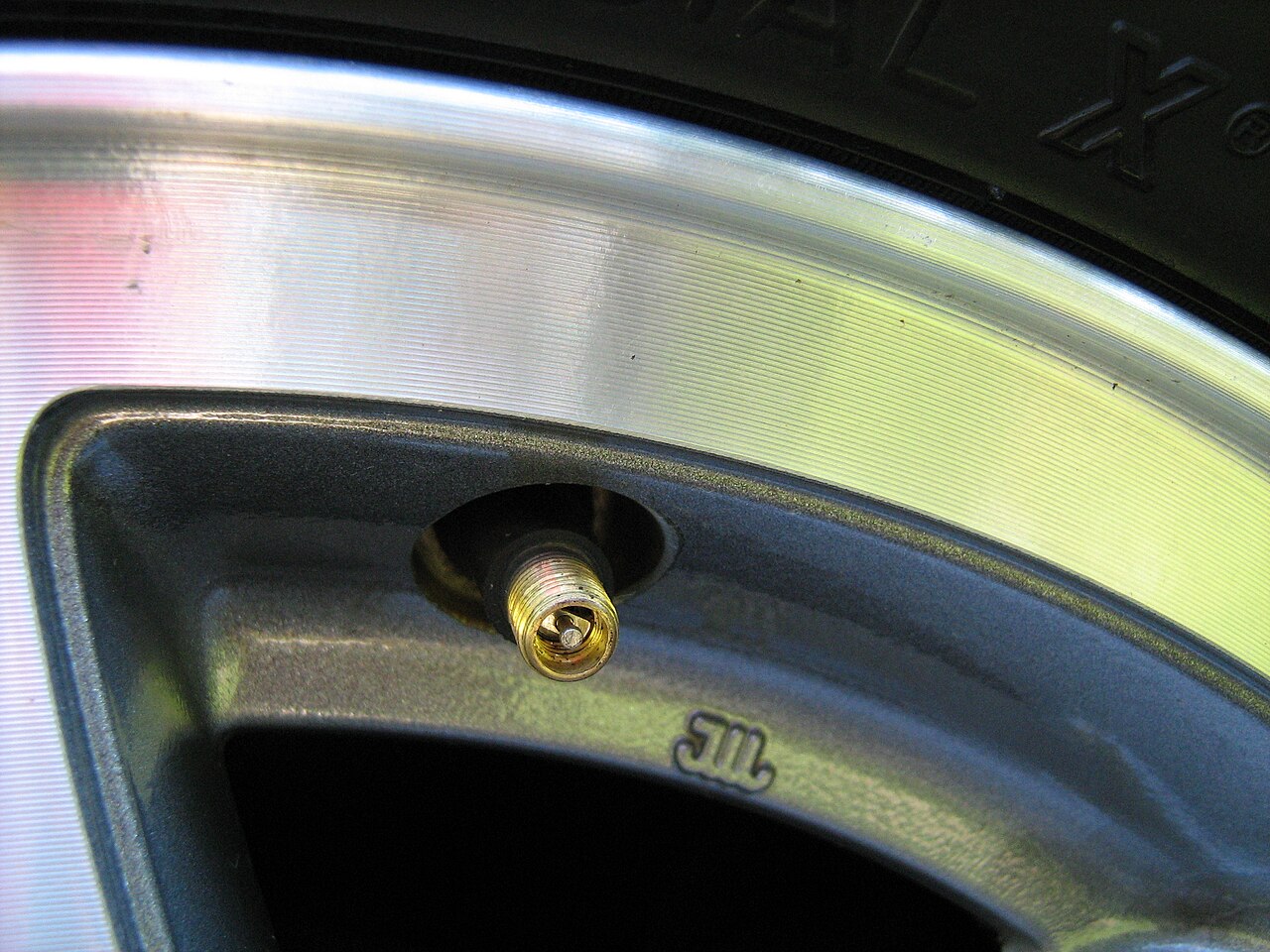
Scorching Saturday afternoon on Federal Highway in Hallandale Beach. You walk out to your car and the front passenger tire sits visibly lower than the rest — not flat, just soft, the way a tire looks when it's been losing a little air every day. You crouch down, press your ear near the valve stem, and catch it: a faint, steady hiss right at the stem. That's the classic signature of a tired valve core, and it's a fifteen-minute fix you can do in the parking lot.
What is a valve core and why does it matter?
A valve core is the tiny threaded plug inside the valve stem — the part your gauge presses down when you check pressure. Think of it like the stopper in a garden hose nozzle: it lets air in when you push on it and seals shut the rest of the time. Cores wear out. Heat, road salt air, and plain age corrode the little spring and seal inside, and then air sneaks past a few molecules at a time. The result is the slow leak: a tire that's fine on Monday and soft by Friday. Low pressure makes the tire run hotter, wear unevenly, and drink more fuel — so a two-dollar core is worth more than it looks.
How do I know the leak is the valve core?
Check these signs before you buy parts:
- One tire sits 2–3 PSI below the others every few days, while the rest hold steady.
- You hear a faint hiss coming from the valve stem area — not the tread, not the sidewall.
- Spit or soapy water on the tip of the stem bubbles even with the cap on tight.
- The tread has no nails, screws, or visible punctures.
If the hiss comes from the tread or the sidewall, stop — that's a puncture, not a core problem, and a sidewall puncture means the tire needs replacement, not repair.
What tools do I need?
Two things, both cheap:
- A valve core tool — a small T-handled tool sold at any auto parts counter, often under five dollars. In a pinch, some valve caps have a core remover built into the top.
- A new valve core — sold in multi-packs. Ask the parts counter for a standard passenger-car core and they'll match it to your stem.
Keep a compressor or a full-size spare nearby. The moment the old core comes out, the tire dumps all its air in seconds — you need a way to fill it back up right there.
How do I swap the valve core, step by step?
- Check the pressure first. Note the reading so you know your target when you re-inflate.
- Unscrew the old core. Push the slotted end of the core tool down over the core inside the stem and turn counter-clockwise. It backs out like any normal screw — lefty-loosey.
- Let it empty, then inspect the stem. The tire will go flat fast; that's normal. Look inside the stem mouth for cracks, corrosion, or a warped seat. If the stem itself is damaged, a new core won't seal — you need a new stem or a pro.
- Thread in the new core. Drop it in and turn clockwise until it's snug. Firm, not gorilla-tight — over-tightening can crack the seal.
- Re-inflate to the recommended PSI. Find the number on the driver's door jamb sticker, not the number molded on the tire sidewall.
- Leak-test with soapy water. Dab it around the stem tip. No bubbles means the new core is seated and sealed. Bubbles mean back the core out and reseat it.
That's the whole job — usually under fifteen minutes once you've done it once.
Here's a short DIY video that shows the core swap in action — three ways to get a tire valve core out without a special tool, with close-ups of how the core threads in and out of the stem.
The video demonstrates removing a tire valve core with needle-nose pliers, with two nails, and with the dust-cap trick, then shows a close-up of the core and its threads so you can see exactly what you're turning when you do it yourself.
What if the leak doesn't stop after the swap?
Three possibilities, in order of likelihood:
- The stem is cracked or warped. Rubber stems age out in the Florida sun. If the stem wobbles or shows dry-rot cracks, the core can't seal against it — the stem needs replacement, which means breaking the bead and is a shop job.
- The new core isn't seated right. Back it out, check the little rubber seal for nicks, and thread it back in carefully. A cross-threaded core leaks just like a bad one.
- The leak was never the core. Recheck the tread and the bead where the tire meets the rim. A slow bead leak from corrosion on the wheel needs the tire dismounted and the rim cleaned.
If you've reseated the core twice and the soapy water still bubbles, the problem is downstream of the core — time for a pro to look at the stem, the bead, or the tire itself.
When to call us
DIY is great, but some jobs need a pro. If the stem is cracked, the leak is in the sidewall, the bead won't seal, or you'd rather have an expert handle it, call (754) 243-8415 — Hallandale Mobile Tire serves Hallandale Beach and Broward (Mon-Sat 8AM-8PM). No pressure, no upsells.
Stuck on the Shoulder Right Now?
Hazards on, passenger-side exit, call dispatch. We roll in 15 minutes.
📞 Call (754) 243-8415If You Don't Have a Spare
Many newer vehicles (and most diplomat-garage vehicles) ship without a spare. If that's you, our Diagnostic is the next read: scenarios/no-spare-tire.html. Service call is $40 with a $40 booking hold, and we get you home or to a shop.