A typical Saturday morning in Hallandale Beach: the sun is shining, the palm trees are swaying, and the smell of freshly brewed coffee wafts from the kitchen window. You're getting ready for a day out with friends, but as you're about to leave, you notice the spare tire in the trunk looks a bit... flat. You wonder, is it really inflated, or should you take a closer look?
Why donut pressure is different
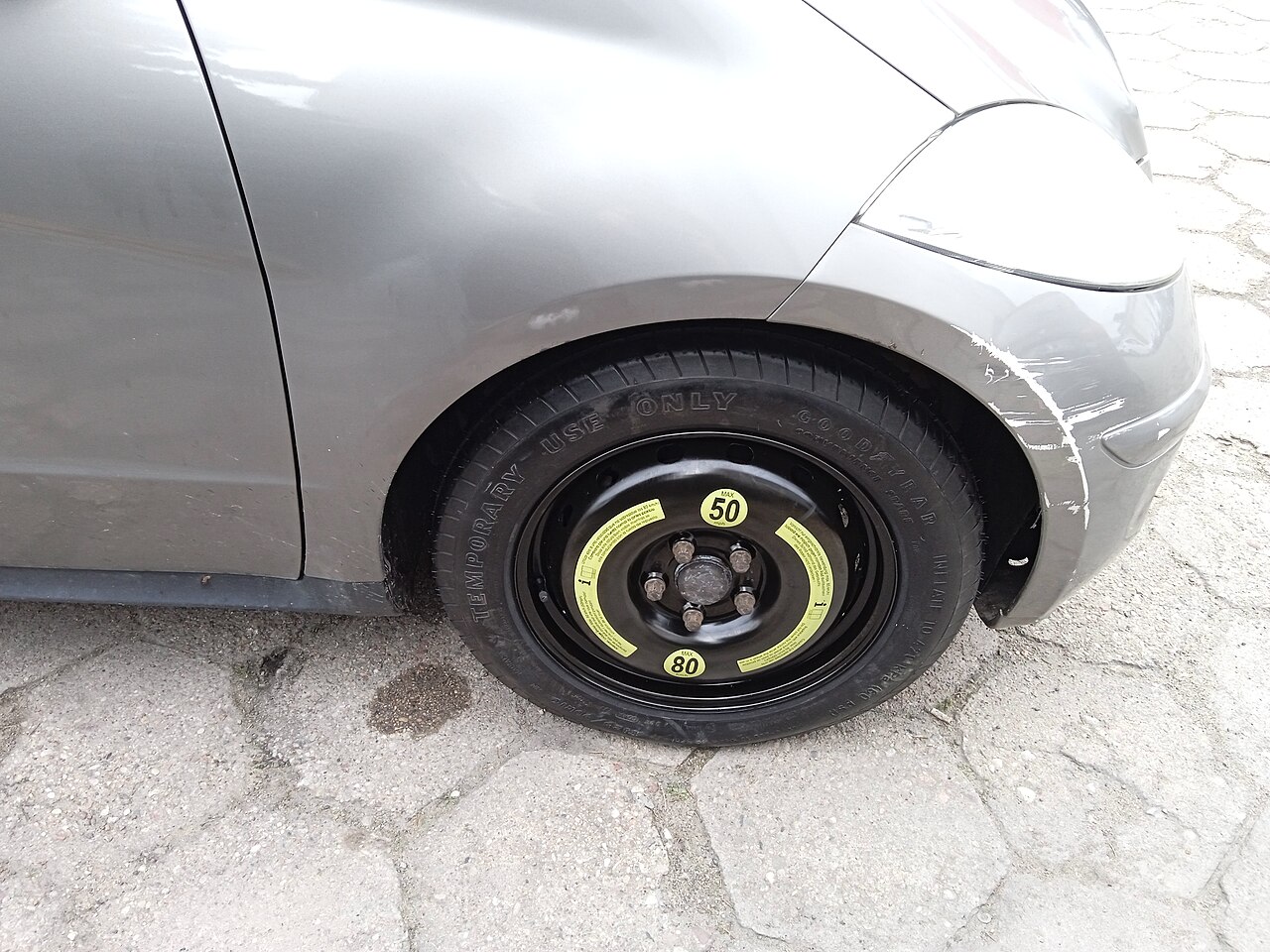
A donut spare is smaller and narrower than your regular tires, so it needs higher pressure to carry the same weight — that's why the sidewall number (usually 60 PSI) looks so high compared to the 30-something PSI your normal tires take. Don't inflate it to your regular tire pressure and call it done; that's underinflated for a donut.
Proper inflation matters because an underinflated donut flexes too much, builds heat fast, and can fail — especially on hot pavement. And remember the donut's limits: it's a get-you-home tire, typically rated for 50 mph and around 70 miles. It's not a fourth regular tire.
How to check the inflation of your donut spare
Checking the inflation of your donut spare takes a few minutes and a tire pressure gauge:
- Pull the donut out of the trunk or lower it from under the vehicle.
- Read the recommended pressure molded into the tire's sidewall — look for the PSI number (commonly 60 PSI on donuts).
- Press the gauge firmly onto the valve stem and read the pressure. Check it cold — before driving, or after the tire has sat for hours.
- If it's low, add air until it reaches the sidewall number. Any gas station air pump works.
- Recheck with the gauge after filling, then put the spare back.
Make this a twice-a-year habit — when you check your regular tires, check the spare too. A spare that hasn't been touched in two years is the one that lets you down at 11 PM on I-95.
Common mistakes to avoid
When checking your donut spare, watch out for these:
- Inflating it to your regular tire pressure. 35 PSI in a donut rated for 60 is underinflated.
- Eyeballing it. You can't judge pressure by looking — a donut at 30 PSI and 60 PSI can look nearly identical.
- Checking it hot. Pressure reads higher right after driving. Check cold for the true number.
- Forgetting it exists. The spare loses air just sitting there. Check it when you check your other tires.
The video above is "Portable Tire Inflator Review — A Must For Any Vehicle!" It demonstrates topping off a tire with a portable 12V inflator — the kind that plugs into your car's power outlet. If your donut is low and there's no gas station nearby, a portable inflator like the one shown is exactly how you'd bring it up to its sidewall pressure on the spot.
When to Call Us
If you're unsure about the inflation of your donut spare or if you're experiencing any issues with your vehicle, don't hesitate to call Hallandale Mobile Tire at (754) 243-8415. We serve the Hallandale Beach and Broward areas, and our team of experienced technicians is always happy to help.Stuck on the Shoulder Right Now?
Hazards on, passenger-side exit, call dispatch. We roll in 15 minutes.
📞 Call (754) 243-8415If You Don't Have a Spare
Many newer vehicles (and most diplomat-garage vehicles) ship without a spare. If that's you, our Diagnostic is the next read: scenarios/no-spare-tire.html. Service call is $40 with a $40 booking hold, and we get you home or to a shop.