You're rolling west on Hallandale Beach Boulevard just past the Diplomat Mall, windows down because the March air still carries that salt-sweet breeze off the Intracoastal. The steering wheel feels loose in your hands — not sloppy, exactly, but like the front tires are floating a little over the pavement seams. You tap the brakes at the light by Three Islands Boulevard and the car shimmies, a quick side-to-side wag that settles fast. That shimmy? It's the first whisper your tires are running too much air.
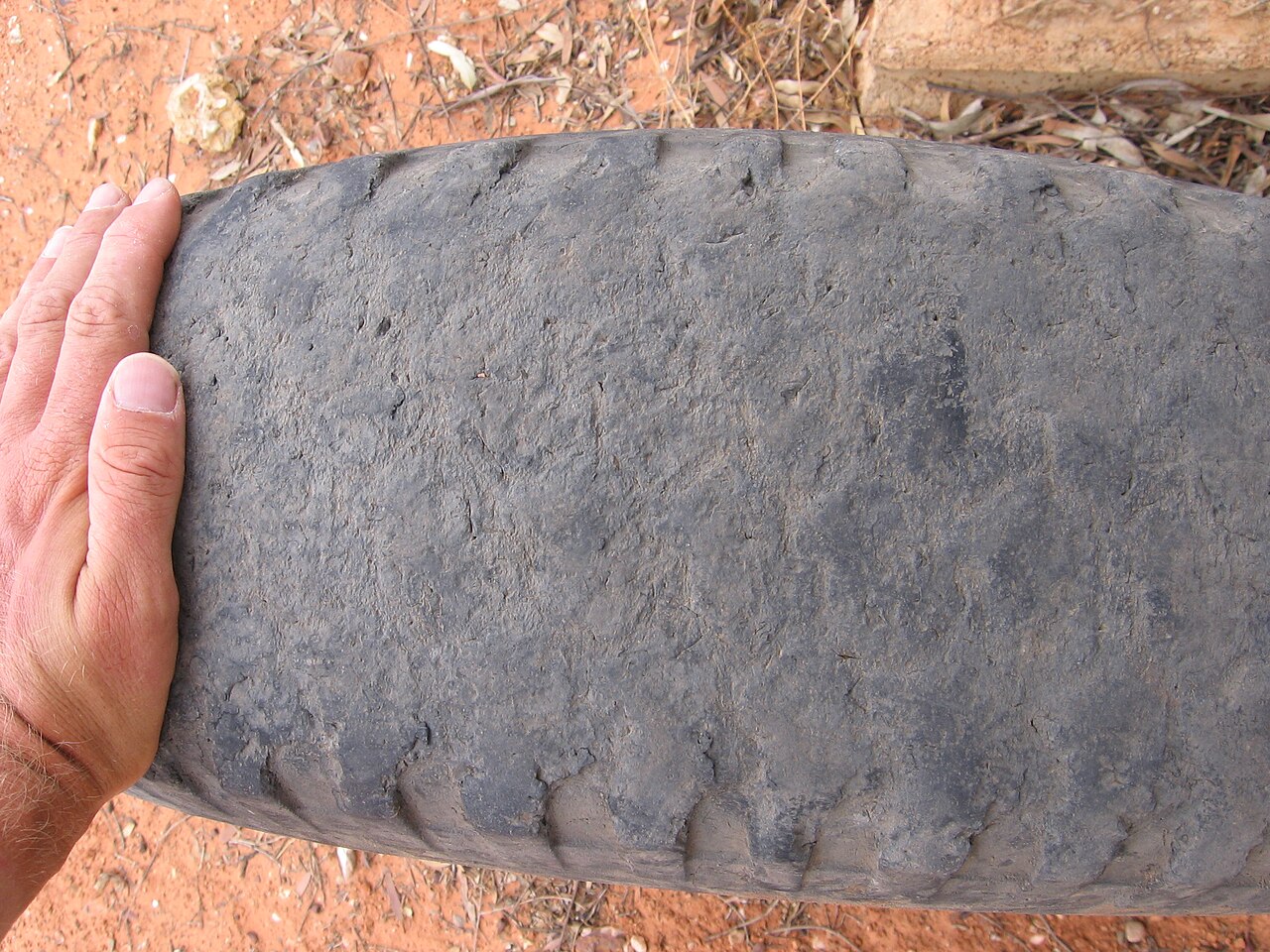
South Florida heat does the rest. By the time you hit the Turnpike on-ramp at noon, the blacktop is holding 130 degrees. Air inside your tires expands roughly 1 PSI for every 10-degree climb. If you set them to 35 PSI in the cool morning garage, you're riding on 39 or 40 by lunch. The center tread takes the whole load while the shoulders barely kiss the road. Six months later you're buying tires because the middle is bald and the edges look new.
What does center wear look like on the tire?
Run your hand across the tread face. The center ribs feel slick, almost polished, like a worn kitchen countertop. The outer ribs still have sharp, defined blocks you can catch a fingernail on. Shine a phone flashlight across the groove at a low angle — you'll see the center grooves are shallower, maybe 2/32 inch deep while the outer grooves sit at 6/32 or more. That difference is the fingerprint of overinflation.
Think of a balloon. Blow it up just right and the whole surface stretches even. Keep blowing and the middle bulges tight while the ends stay soft. Your tire does the same thing. The contact patch — the flat oval where rubber meets road — shrinks from a wide rectangle to a narrow strip right down the centerline. All your braking, cornering, and acceleration forces concentrate on that strip. It scrubs off rubber fast.
You'll also notice the ride gets harsh. Every expansion joint on I-95 sends a sharp thump through the seat. The sidewalls can't flex because they're stretched drum-tight. That stiffness transmits every road imperfection straight to the suspension. Your shocks work overtime, and you feel it in your lower back after a long drive.
Why does overinflation cause center wear?
Air pressure pushes outward equally in all directions. At the correct pressure — say 32 PSI for a typical sedan — the tire's internal structure (the belts and plies) holds a shape that puts the full tread width on the pavement. The contact patch might be 6 inches wide and 4 inches long, giving you 24 square inches of grip per tire.
Add 8 PSI and the tire crowns. The belts pull tight, the sidewalls stiffen, and the contact patch narrows to maybe 3 inches wide. Same vehicle weight, half the footprint. Pressure per square inch doubles. The center rubber scrubs away twice as fast. Meanwhile the shoulders barely touch, so they keep their factory tread depth. You end up with a tire that's legally bald in the middle but passes the penny test on the edges.
Here's the second way to see it — kitchen style. Press a sponge flat against the counter with your whole palm. The whole sponge touches. Now press with just two fingertips. Only the center compresses. The edges stay dry. Your tire's contact patch works the same way. Overinflation turns your palm into fingertips.
How do you check pressure the right way?
Cold pressure means the car hasn't moved more than a mile in the last three hours. Morning before work is ideal. Pull the valve cap, press a digital gauge straight onto the stem — don't angle it or you'll bleed air and get a false low reading. Read the number. Compare it to the white-and-yellow placard on the driver's door jamb, not the number molded into the tire sidewall. That sidewall number is the maximum the tire can hold, not what your car needs.
If the placard says 32 PSI and your gauge reads 38, you're over by 6. Press the gauge's bleed button or the little pin on the back of a pencil gauge. Let air escape in short bursts. Recheck. Repeat until you hit 32 exactly. Do all four tires, plus the spare if it's a full-size. A compact spare runs 60 PSI — different rule.
Gas station air hoses are convenient but their built-in gauges are often off by 3–5 PSI. Keep a $15 digital gauge in the glove box. It pays for itself in one set of tires. Check monthly, and always before a highway trip. Pressure drops about 1 PSI per month naturally, plus 1 PSI per 10-degree temperature drop. A cold front in January can steal 5 PSI overnight.
Can you fix center wear once it starts?
No. Rubber doesn't grow back. But you can stop it from getting worse. Drop the pressure to spec today and the remaining tread wears evenly from here out. The tire lasts longer, rides quieter, and stops shorter. If the center is already down to 2/32 inch — the wear bars are flush — the tire is done. Florida law requires 2/32 minimum. Replace it.
Rotation helps only if you catch it early. Move the overinflated tires to the rear (or cross them on a front-drive car) and the fresh shoulders take the load. But you still have to fix the pressure first. Rotating bald centers to the back just moves the problem.
What other problems does overinflation cause?
Longer stops. With half the contact patch, you have half the friction. At 60 mph on wet I-95, that's an extra 20–30 feet to halt. Hydroplaning risk jumps because the narrow center groove can't channel water fast enough. The tire rides up on a water wedge sooner.
Sidewall damage. Stiff sidewalls can't absorb pothole impacts. The rim hits the pavement edge through the tire, pinching the sidewall. That creates a bulge — a separation of the inner liner from the belts. A bulge is a blowout waiting. You'll see it as a grape-sized lump on the sidewall. No repair. Replace immediately.
Uneven suspension wear. The harsh ride hammers ball joints, tie rods, and strut mounts. Bushings crack early. You'll hear new clunks over speed bumps within a year. Alignment goes out faster because the tire's spring rate changed — it acts like a stiffer spring, altering the suspension geometry dynamically.
DIY video guide
The video below demonstrates the chalk test -- the hands-on way to find the right pressure for your exact tire. The host chalks a thick line across the tread, drives a short distance, then reads where the chalk wore off: worn in the center means too much air, worn on the edges means too little, even wear across means the pressure is right. He runs the test at several pressures and measures the contact patch at each step so you can see the footprint widen as pressure drops. He also notes that rim width versus tire width affects the pattern, so the chalk test beats guessing from a chart. For center wear, this is the definitive check: if your chalk wears off the middle first, you are overinflated, full stop.
When to call us
DIY is great, but some jobs need a pro. If the problem persists, you spot anything dangerous, or you'd rather have an expert handle it, call (754) 243-8415 — Hallandale Mobile Tire serves Hallandale Beach and Broward (Mon-Sat 8AM-8PM). No pressure, no upsells.
Stuck on the Shoulder Right Now?
Hazards on, passenger-side exit, call dispatch. We roll in 15 minutes.
📞 Call (754) 243-8415If You Don't Have a Spare
Many newer vehicles (and most diplomat-garage vehicles) ship without a spare. If that's you, our Diagnostic is the next read: scenarios/no-spare-tire.html. Service call is $40 with a $40 booking hold, and we get you home or to a shop.