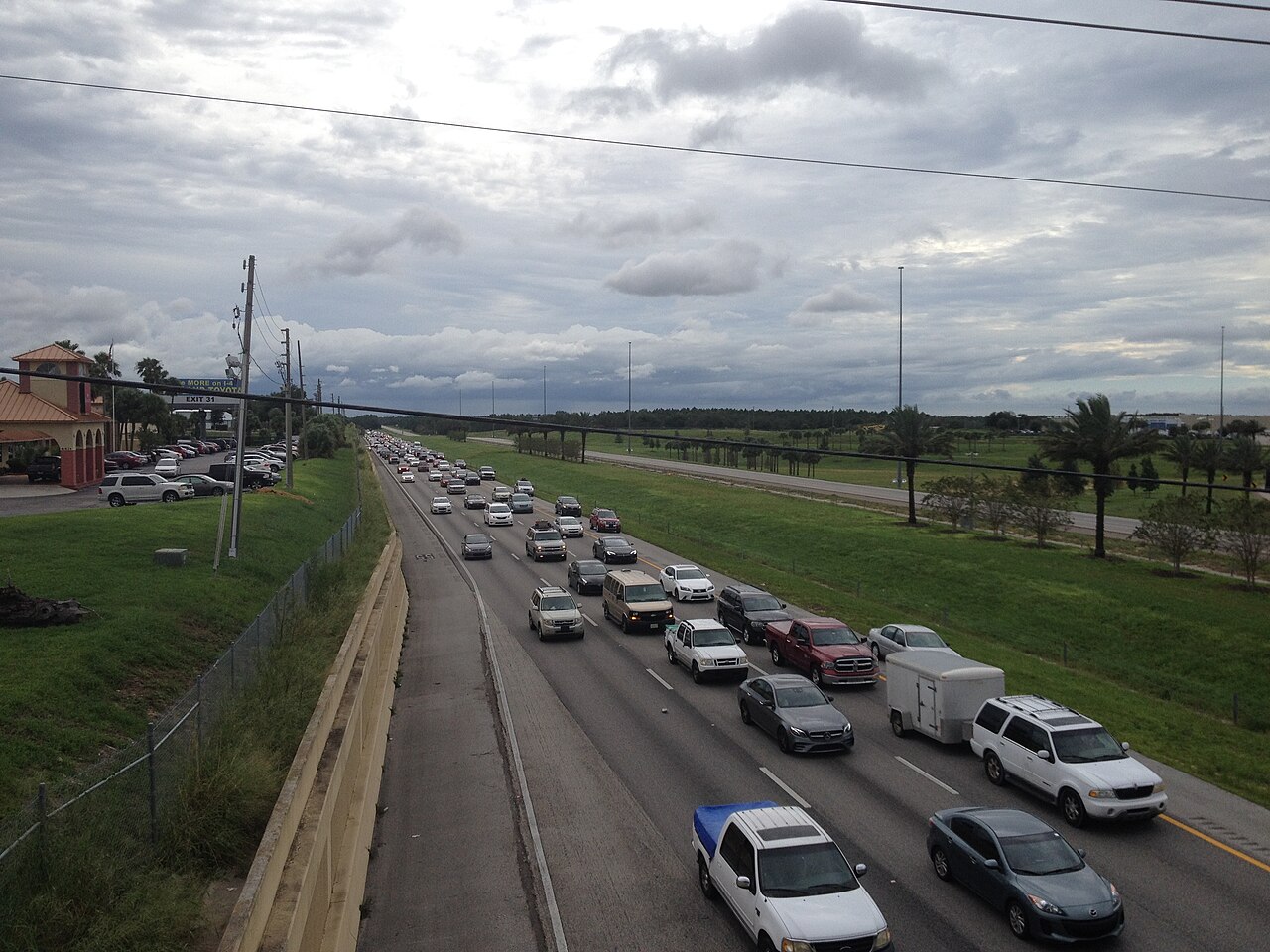
That July afternoon, the sun was hammering the asphalt on I-95 just north of Hallandale Beach Boulevard. A gray sedan was cruising at 65 mph in the middle lane when the right rear tire let go with a bang like a gunshot. The car lurched right. The driver's hands went white on the wheel. In the mirror, a semi was closing fast. Everything about the next ten seconds mattered more than everything about the next ten minutes.
What should you do the second a tire blows?
Your instincts will lie to you. The car pulls hard toward the blown tire, and every nerve says yank the wheel the other way and stand on the brake. Do neither. A hard swerve or hard braking at 65 mph is what turns a blowout into a rollover. The right sequence is boring and it works: both hands firm on the wheel, foot easing off the accelerator, eyes on the lane ahead. Let the drag of the flat tire slow you down. The car will want to drift — correct it with small, steady inputs, not big ones. When the speedometer drops under 40, check the mirror, signal, and ease onto the right shoulder in one smooth move. Hazards on the moment you're stopped.
The video below is a driving-school simulation from Winsors Driving that shows this exact sequence — what a front tire blowout feels like and how to keep the car straight through it. Watch it once and the order sticks: grip, don't brake, coast down, then move over.
This short simulation from Winsors Driving walks through a front tire blowout as it happens. The instructor demonstrates the correct reactions in order: both hands firm on the wheel to fight the pull, no hard braking (which can throw the car sideways), foot easing off the gas, steering held straight while the car slows on its own, and a calm move to the shoulder once speed drops. The key points are simple and worth memorizing — grip, don't brake, coast down, then pull over. On I-95 with trucks in the next lane, that discipline is the whole game.
What causes blowouts on I-95 in Broward?
Most blowouts are not bad luck. They're the end of a chain:
- Under-inflation. A tire running 10 PSI low flexes its sidewalls constantly. On 100-degree Broward asphalt, that flexing builds heat until the sidewall cords give way. Under-inflation causes more blowouts than over-inflation.
- Old or damaged rubber. Cuts, bulges, and dry-rotted sidewalls from years of Florida sun and salt air. A bulge the size of a grape is a blowout waiting for highway speed.
- Potholes and debris. I-95 construction zones throw rebar, bolts, and broken pavement into lanes. At 65 mph, one hard strike can pinch the sidewall against the rim and snap the inner cords.
- Overloading. A trunk packed for a beach weekend plus four adults can push a small sedan's tires past their load rating. Check the placard on the driver door jamb.
Why is the I-95 shoulder so dangerous?
Broward's stretch of I-95 carries some of the heaviest truck traffic in Florida, and the right shoulder is narrow in places — barely wider than your car. Drivers drift. A car parked on the shoulder gets clipped more often than people think. That's why the rules are: get as far right as the shoulder allows, wheels turned away from traffic, hazards on, and stay in the car with your seatbelt fastened. If you have passengers, keep them in the car too. Standing on the shoulder next to a blown tire with semis passing at 70 is the most dangerous thing you can do in this situation.
How long should you wait for help?
Call for help the moment you're stopped — don't wait to "see if it's really flat." If you smell burning rubber, see smoke, or spot sparks from a damaged rim, call 911 first: a blown tire can ignite, and a rim grinding on asphalt throws sparks. Get everyone out of the car and well away from the road in that case. For a clean blowout with no fire signs, call a mobile tire service or roadside assistance and stay belted inside the car with the hazards flashing. Keep the engine off. Don't accept help from strangers who stop — wait for the service you called.
When to call us
If a tire blows anywhere in Broward — I-95, the Turnpike, Hallandale Beach Boulevard — call Hallandale Mobile Tire at (754) 243-8415. We serve Hallandale Beach and Broward, Monday through Saturday, 8 AM to 8 PM. We'll come to your shoulder, your parking lot, or your driveway and swap the blown tire for your spare or a replacement on the spot. Don't drive on the rim to the next exit. Don't let a stranger change it on the interstate. One call and you're moving again.
Stuck on the Shoulder Right Now?
Hazards on, passenger-side exit, call dispatch. We roll in 15 minutes.
📞 Call (754) 243-8415If You Don't Have a Spare
Many newer vehicles (and most diplomat-garage vehicles) ship without a spare. If that's you, our Diagnostic is the next read: scenarios/no-spare-tire.html. Service call is $40 with a $40 booking hold, and we get you home or to a shop.